
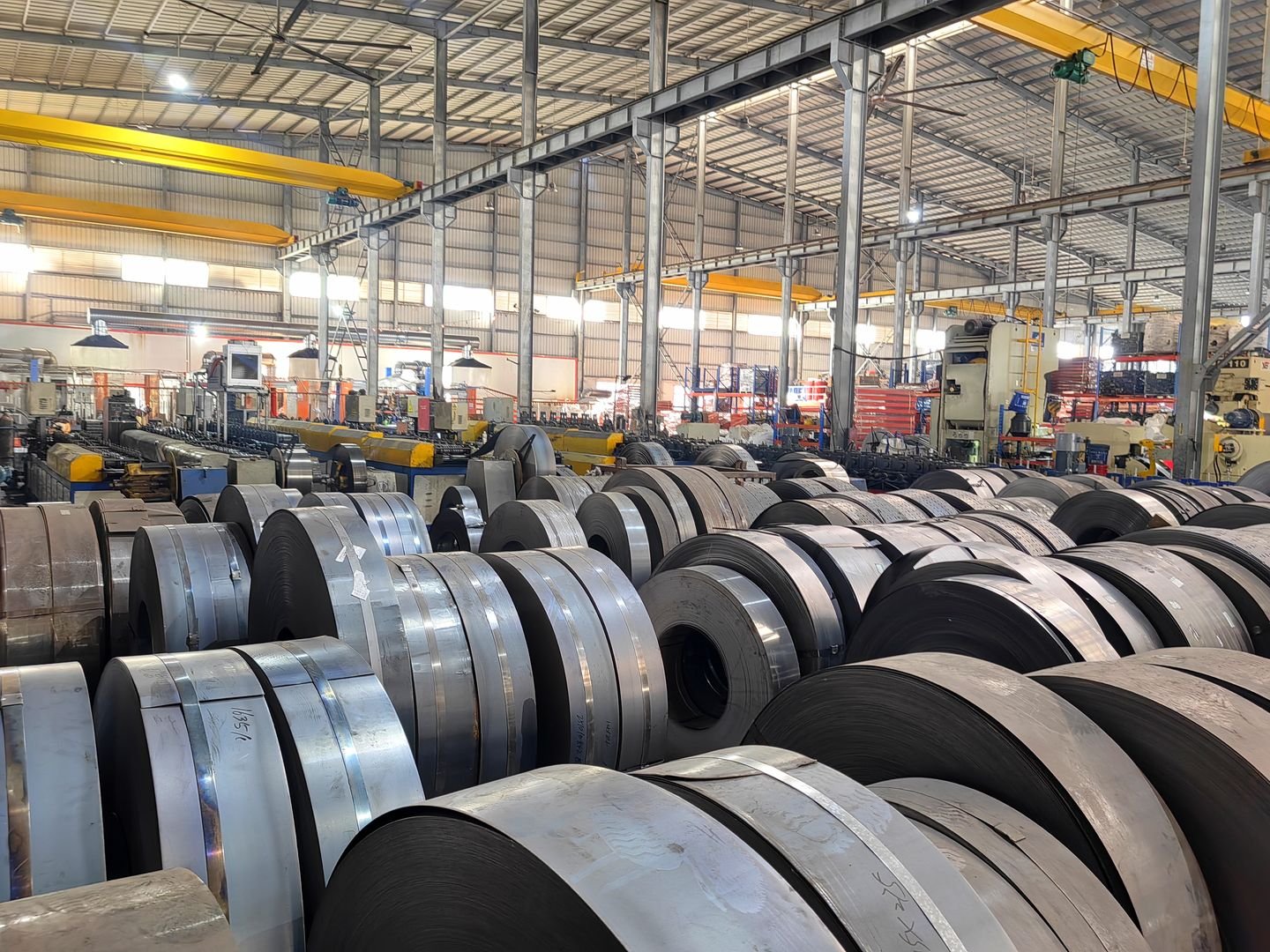
Coil yard
Cold-rolled coil in slit widths, stored indoors under the crane. Thickness and grade are checked against the mill certificate on receipt, before any of it reaches a line.
What it decides: the substrate every profile below is formed from.
Xiamen Hongda Navigation Intelligent Technology Co., Ltd. has designed and built storage racking and logistics equipment since2012. The figures on this page are the operating numbers from our own floor.
Filmed on the floor that produces the orders: decoiling, forming, punching, welding, coating and the finished stacks waiting for the container. No showroom, no stock footage.

A stock model and a custom drawing travel the identical route; only the setting on each machine changes. Each stage below is photographed on our floor, with the thing it decides written underneath it — because that is the part a buyer is really asking about when they ask how it is made.
Cold-rolled coil in slit widths, stored indoors under the crane. Thickness and grade are checked against the mill certificate on receipt, before any of it reaches a line.
What it decides: the substrate every profile below is formed from.

Coil is loaded on the uncoiler and pulled through a straightener, so the strip enters the line flat instead of carrying the curl of the coil.
What it decides: whether the formed profile stays straight after cutting.

Sheet and plate are cut on the plasma table and the shear, to lengths taken from the approved drawing rather than from a stock list.
What it decides: the cut length of every part in the bay.

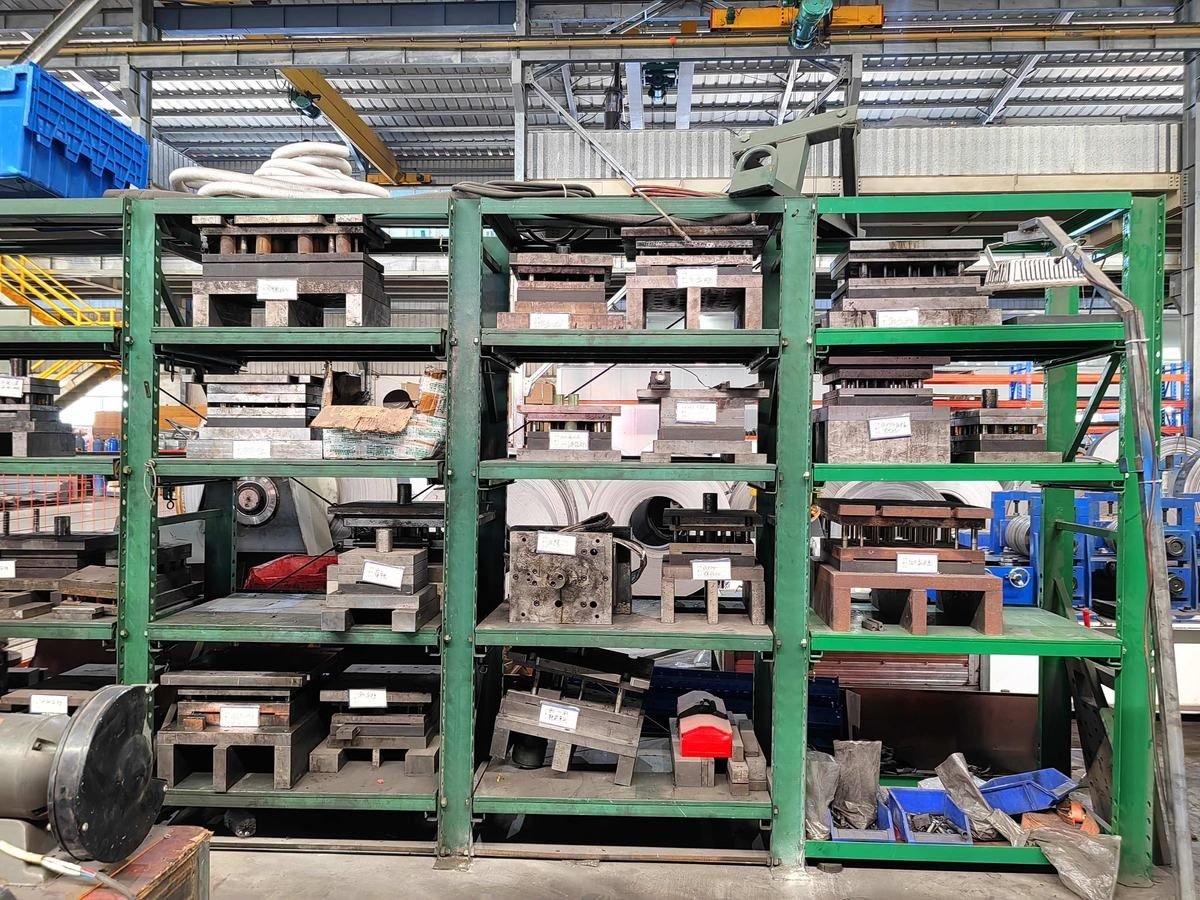
The turret punch puts the hole pattern into uprights and the slots into shelf profiles. Hole pitch is fixed here, and that pitch is what makes a level adjustable later.
What it decides: level adjustability, and where the beam connectors seat.

Roll forming turns flat strip into uprights, beams and shelf edges. The same line runs a heavier section when the load calls for one, which is why a rating change is a line change.
What it decides: section stiffness, and therefore the rated load per level.

Brackets, corner plates and the parts that are not a rolled profile are formed on the press brake, against the same drawing as the rest of the bay.
What it decides: how the frame closes at the corners.
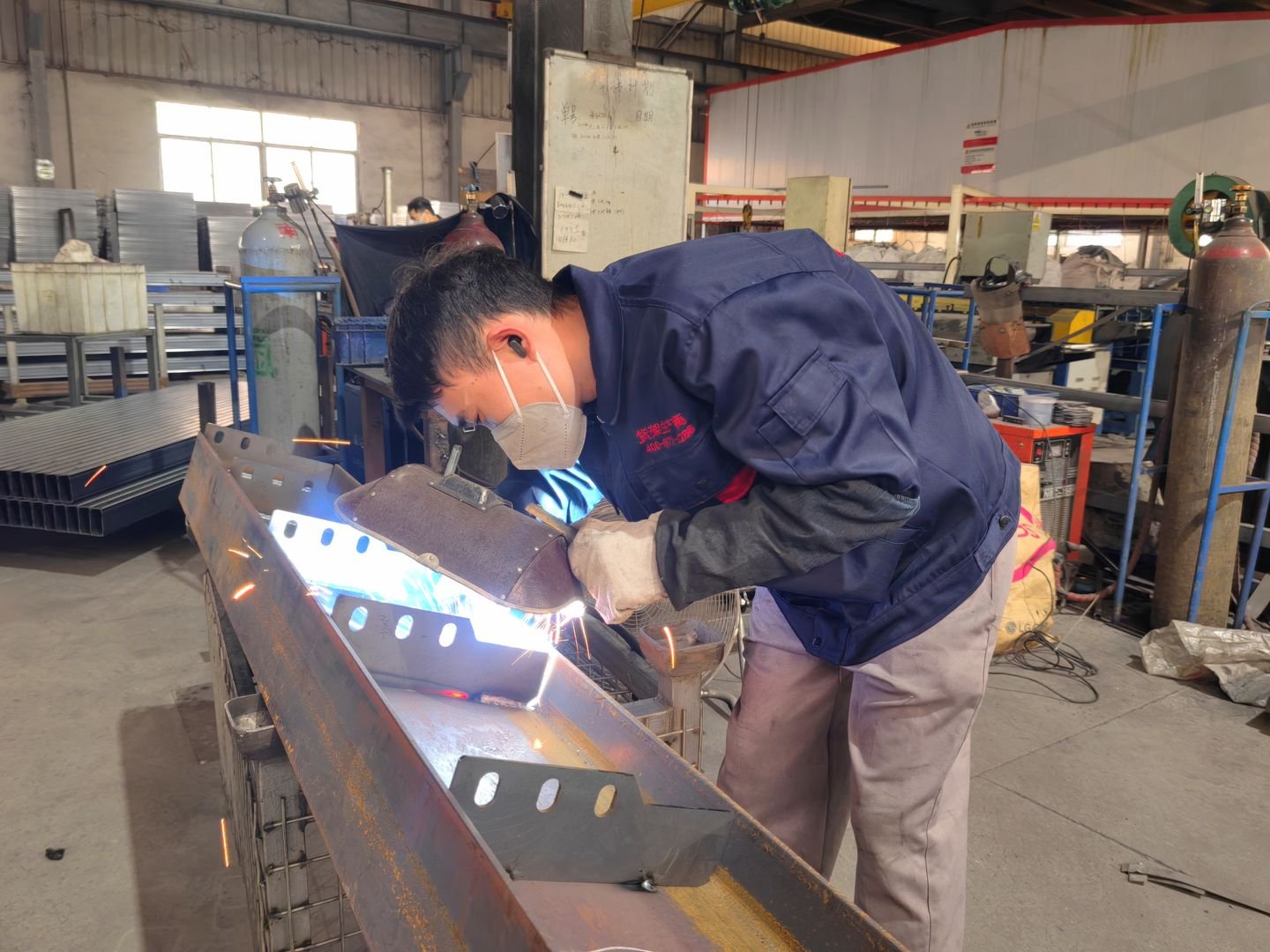
Frames and brackets are welded at fixed stations rather than on the floor. Welds are inspected visually for penetration, and brackets are checked for square before coating.
What it decides: whether the frame stays square under load.
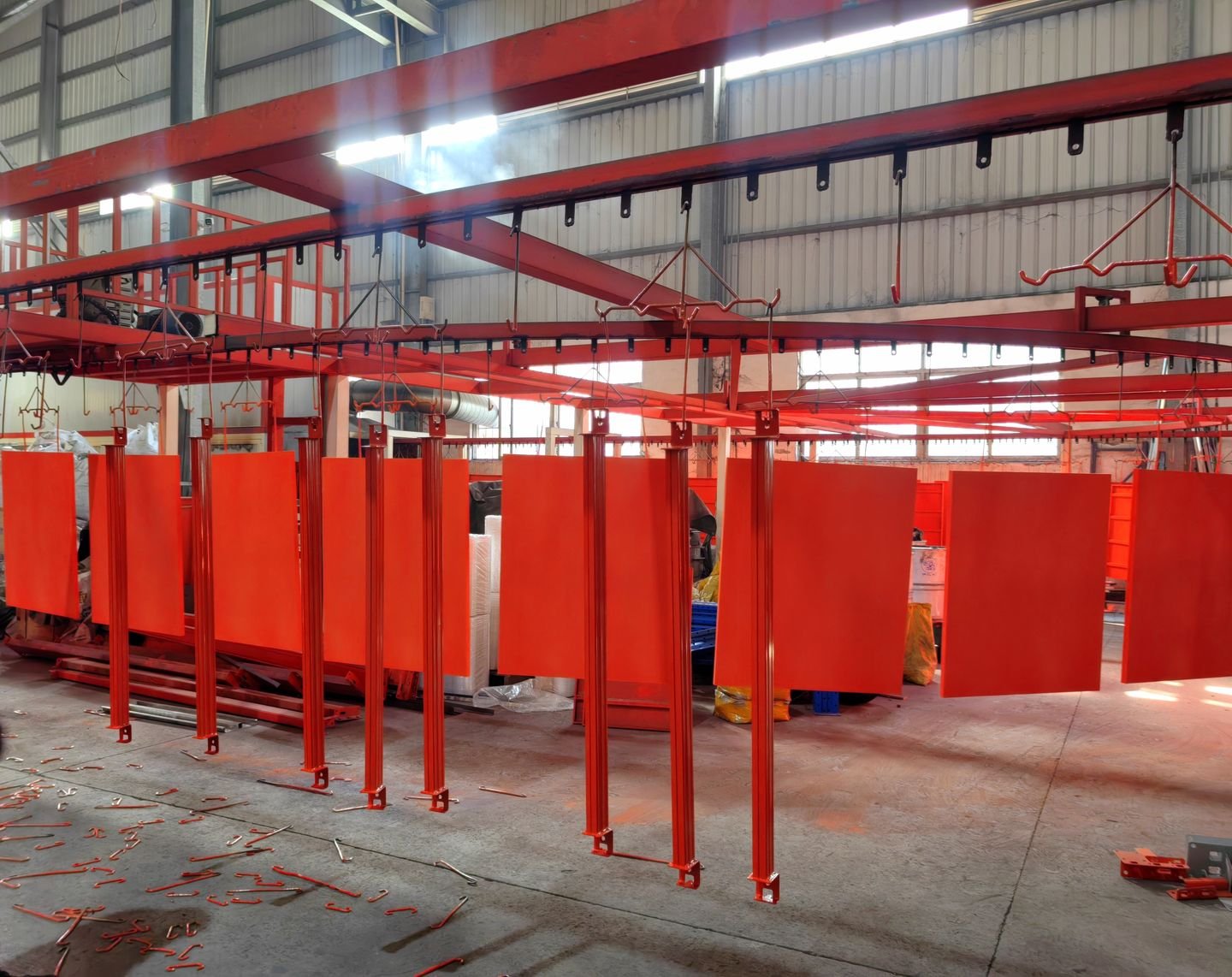
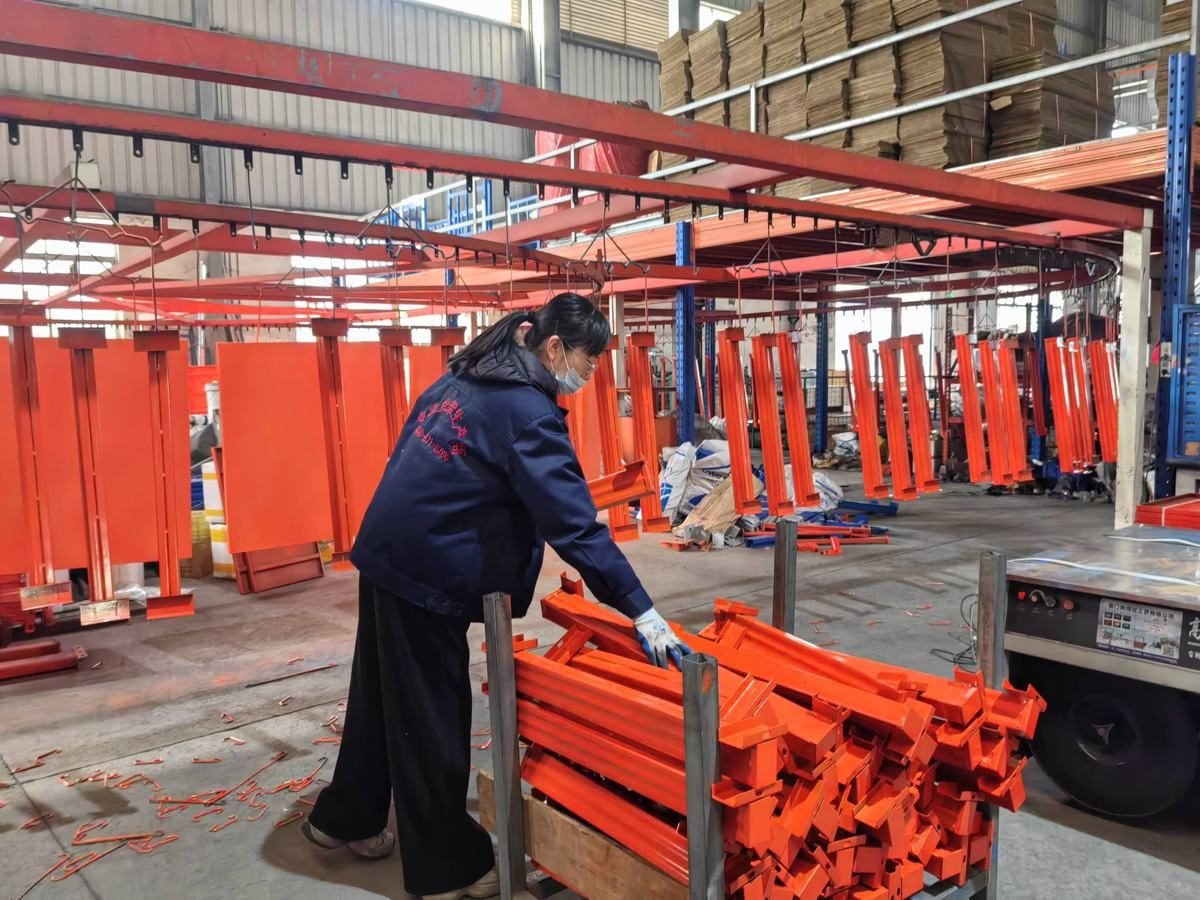
Degrease and pre-treat, then electrostatic powder, then the oven. Uprights hang on an overhead conveyor so the coat reaches the full section, including the inside of the profile.
What it decides: colour, and how the finish survives a humid store.

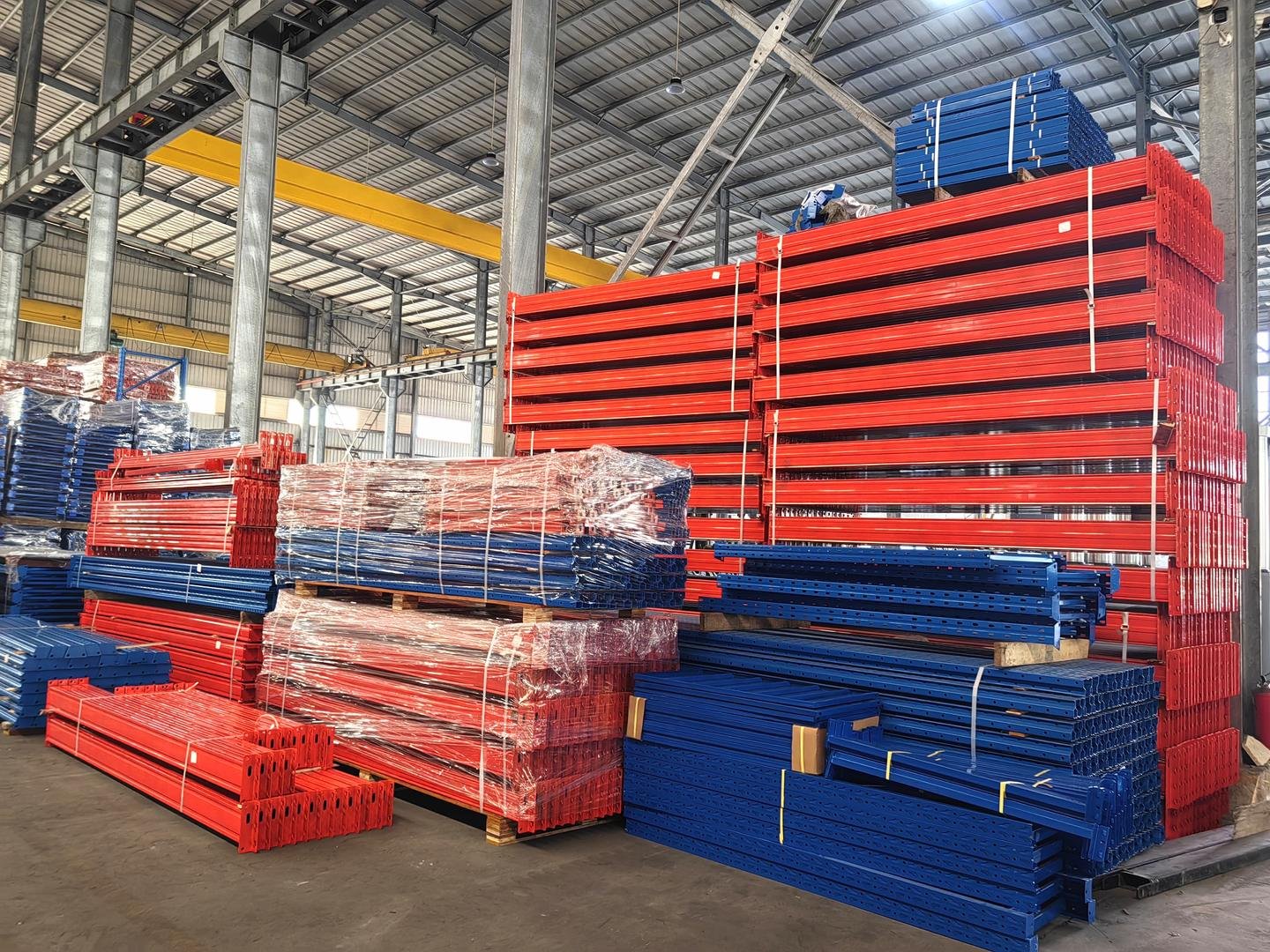
Bundles are film-wrapped and steel-strapped by order, and the packing list is matched to the bundle before it leaves the bay. Nothing is counted for the first time at the port.
What it decides: whether the quantity on the list is the quantity in the container.
Racking is a steel product before it is a storage product. Because the uprights and beams are formed here, a change in load rating is a change on the line — a heavier section, a different hole pitch — rather than a re-order from another factory.
Coil is checked on receipt, formed into profiles, welded at fixed stations, coated on an electrostatic powder line, then bundled and palletised against the packing list. Every one of those steps sits within the same building, which is why a re-run on a missing bundle takes days rather than a shipping cycle.

Taken on the floor rather than in a studio, on ordinary working days and in whatever colour that order was running. If you want to see a specific stage before you order — coating, packing, or a coil actually being formed — ask and we will photograph it for your file.



Incoming steel
Coil thickness and grade checked against the specification before forming.
In-line forming
Profile dimensions checked at the start of each run and at fixed intervals.
Weld inspection
Frame welds inspected visually for penetration and bracket alignment.
Coating check
Film thickness and colour matched against the approved sample.
Pre-shipment
Load test on sample units, quantity and packing list verified before loading.
A racking order is a long, heavy, awkward load, and most of the damage it takes is between the factory and the site. Bundling is done by order rather than by part number, so a bundle that arrives short can be traced to the bundle, not to the container.
Onsite verification by SGS Group dated 2026-06-30. Certificates and reports are issued on request.
Buying racking from a factory you have not visited is a real risk, and most of our customers are in that position on the first order. These are the three ways they normally resolve it.
Read the certificate
Onsite verification by SGS dated 30 June 2026, covering the site and the business licence. The report is issued on request.
Walk the floor on a call
A scheduled video call through the lines in the order they run, so you see the coil, the forming line and the packed bundles in one session.
Start with a sample order
One bay or one shelving unit, built to your drawing, before a container is committed. The sample is the same line as the production run.
Enquiries are handled by the sales team that owns the drawing, so the person quoting is the person answering the technical question. Names are not published here; the reply comes from a named contact.