What powder coating actually protects on steel racking
Colour is the least important thing about the finish. Film thickness and pre-treatment decide whether the racking still looks new in five years.
Racking lives in an environment that is hostile in a very ordinary way: humid air, forklift impacts, cardboard dust, and in cold stores, condensation on every door opening. The coating is the only barrier between that environment and the steel.
Pre-treatment does the work
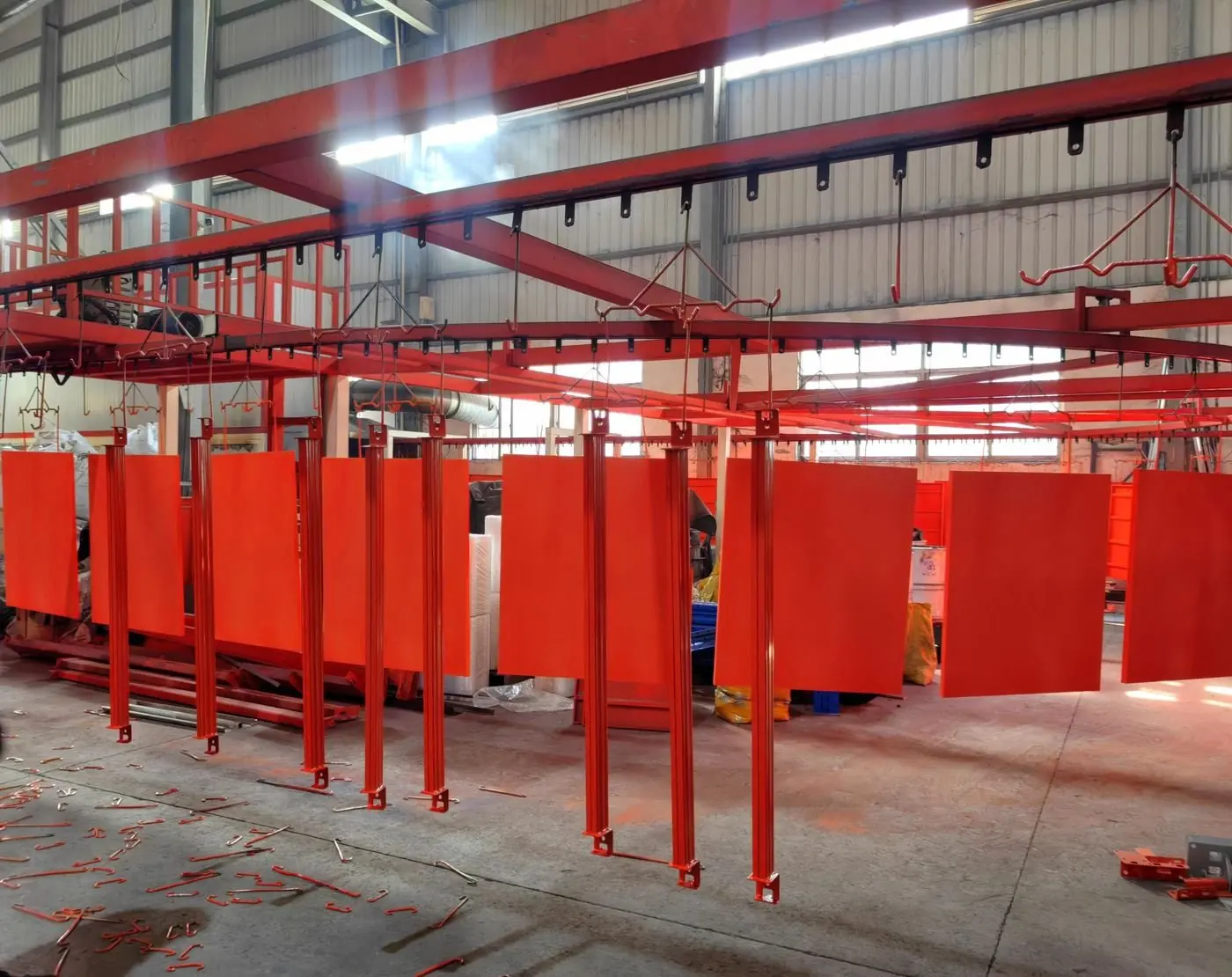
Powder adheres to a clean, chemically prepared surface. Degreasing and a conversion coating come before the powder; skip them and the finish fails from underneath, usually as blistering at edges and welds, which is exactly where a rack is handled. This stage is invisible in a finished product photograph and is the first thing a factory visit should look at.
Film thickness is measurable, so measure it
Industrial racking coatings are typically specified in the 60–80 micron range. A coating thickness gauge costs little and turns "we use good powder" into a number on a report. Ask for the measured value on a sample, not the nominal target.
- Standard indoor use: a single coat over pre-treated steel is normally sufficient.
- Humid, coastal or cold-store environments: specify the coating system for the condition, not just the colour.
- Outdoor storage: powder coating alone is rarely the right system; ask what is specified for UV and moisture.
Why colour still matters
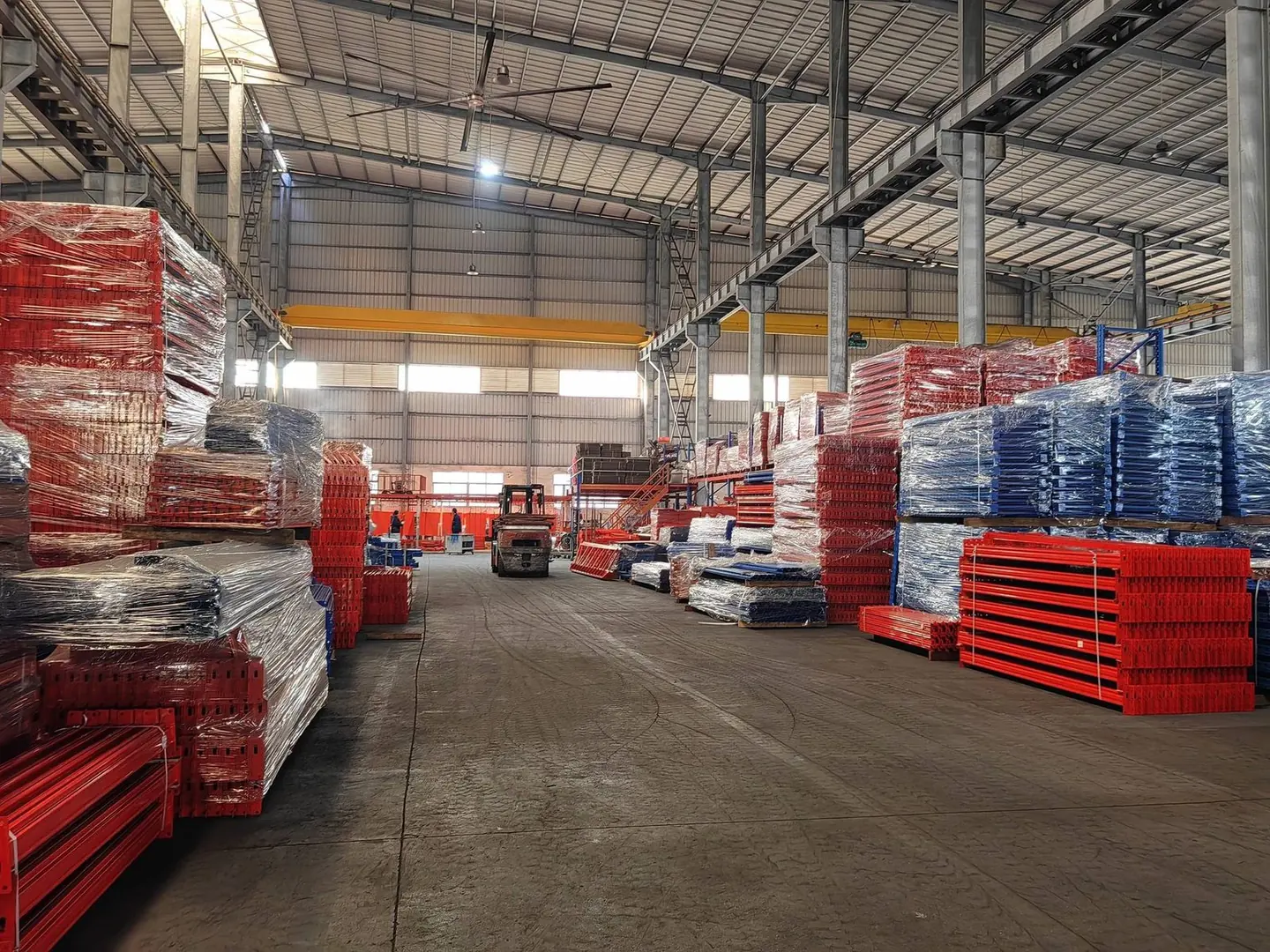
Not aesthetically — operationally. Colour-coding by duty level or by zone makes inspection faster and makes a damaged upright obvious. Orange on load-bearing structure is a maintenance decision before it is a branding one.